Dinners with Dad

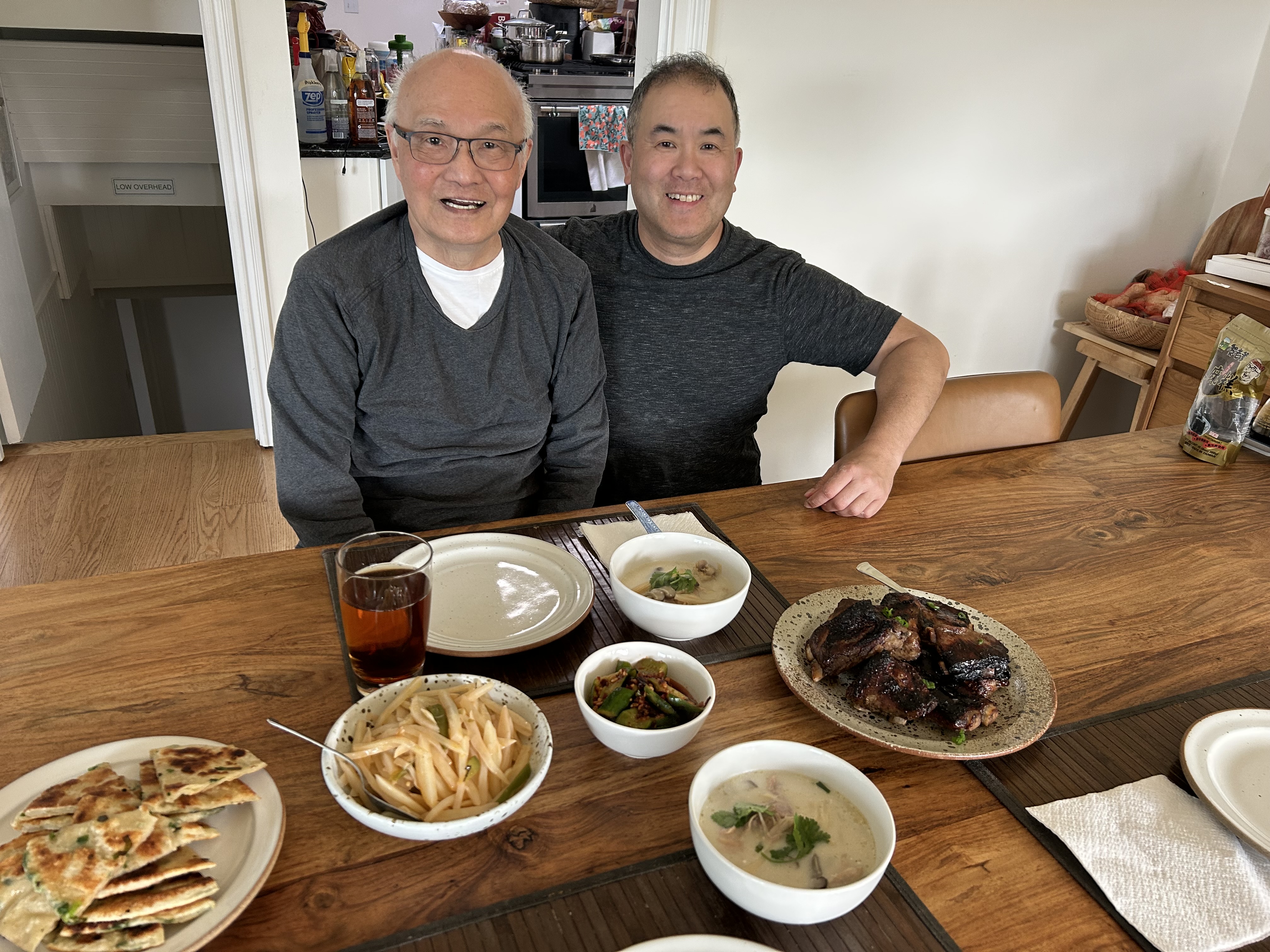
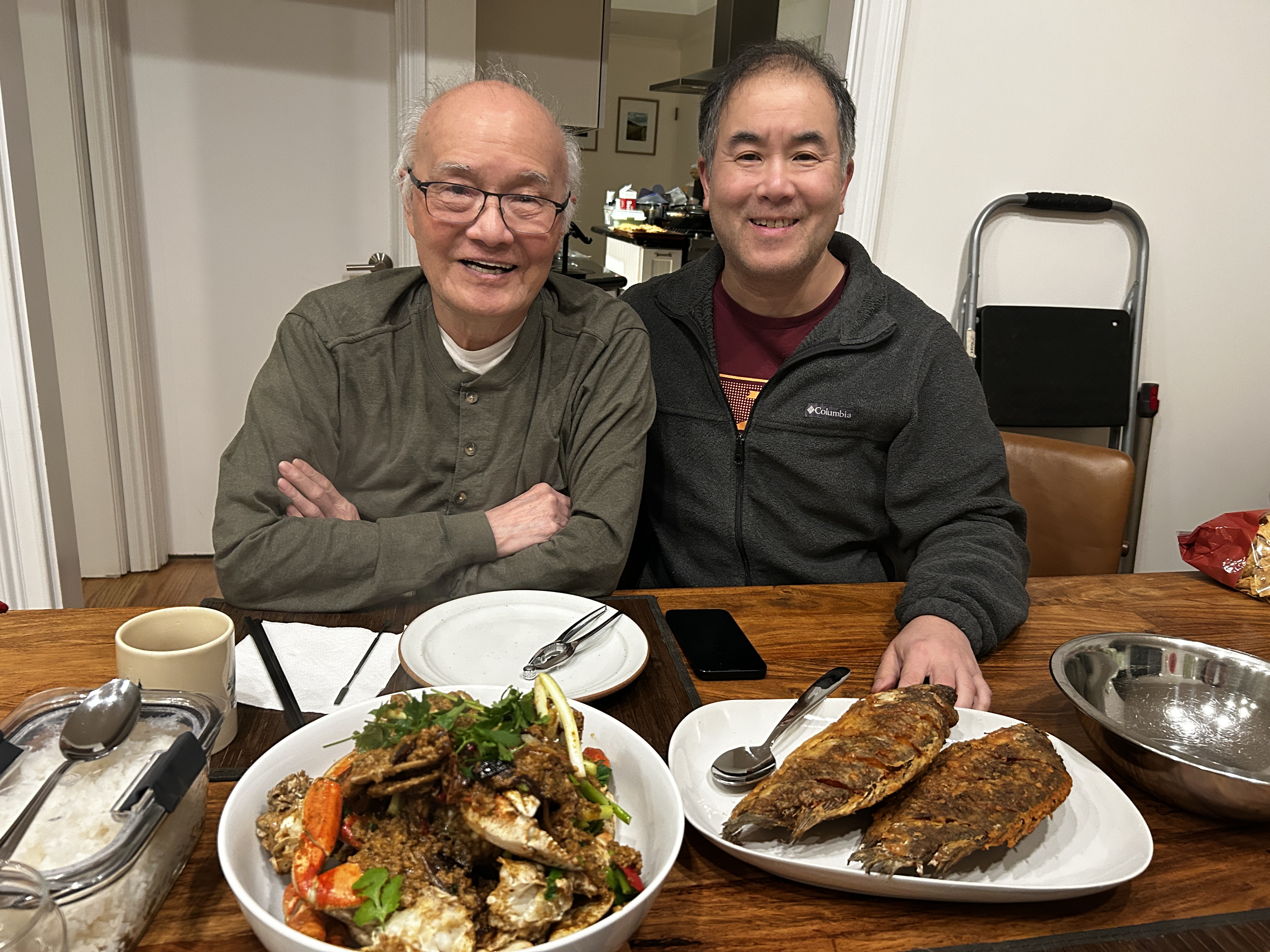
Dinner with Dad

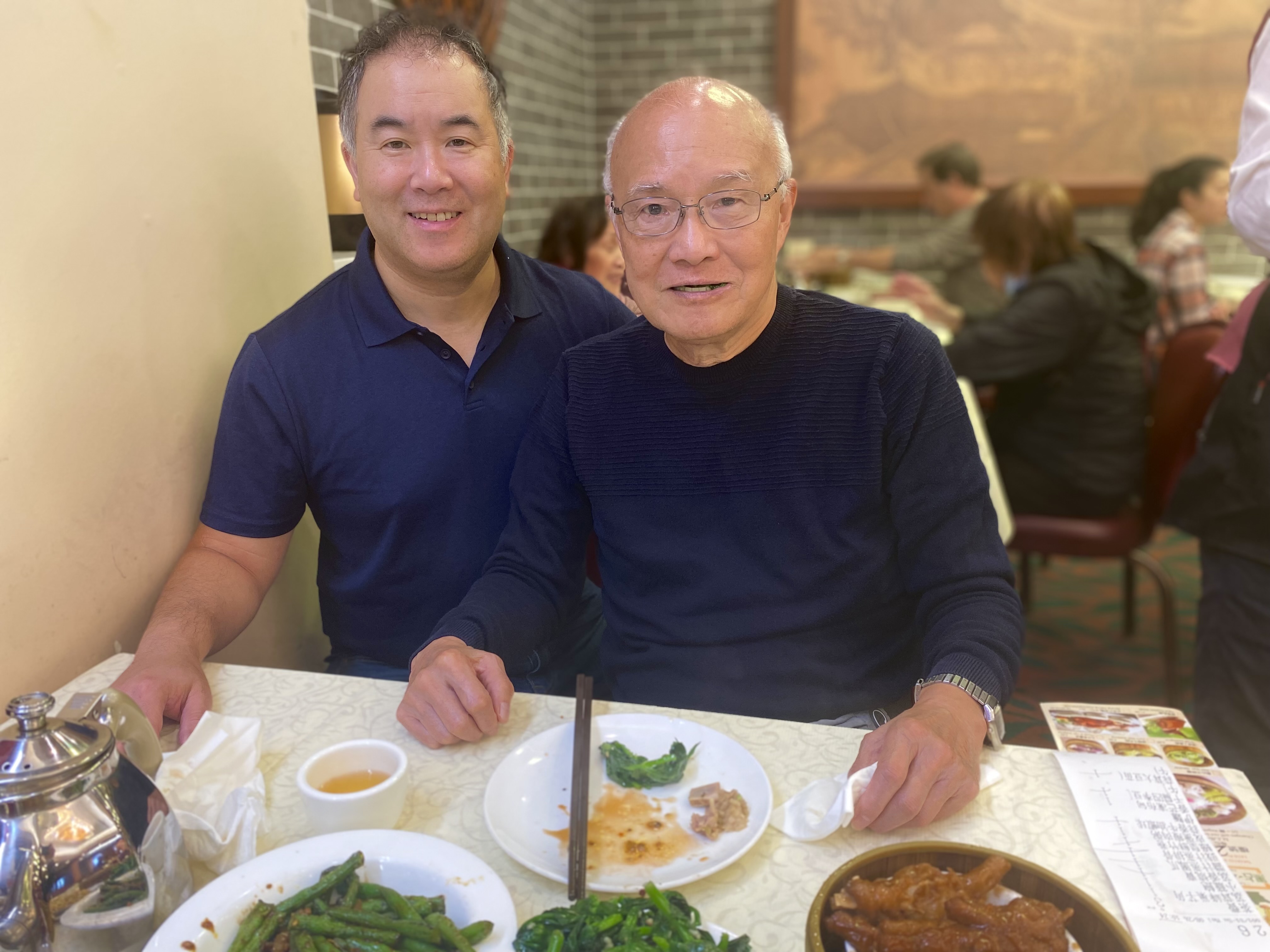
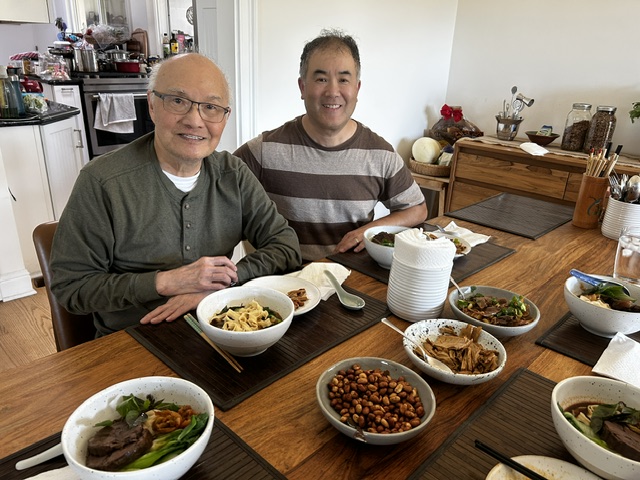
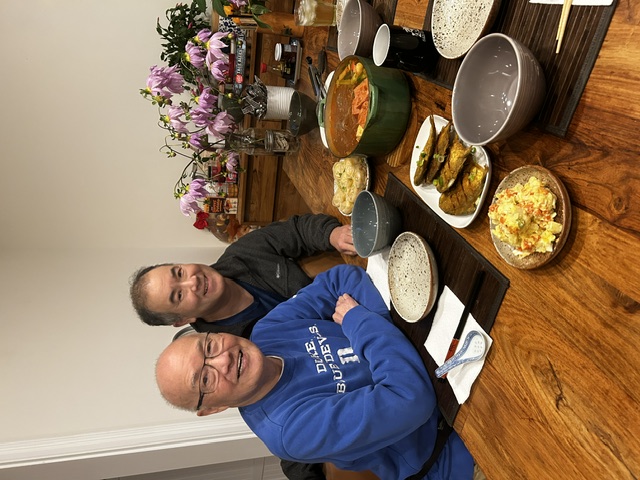
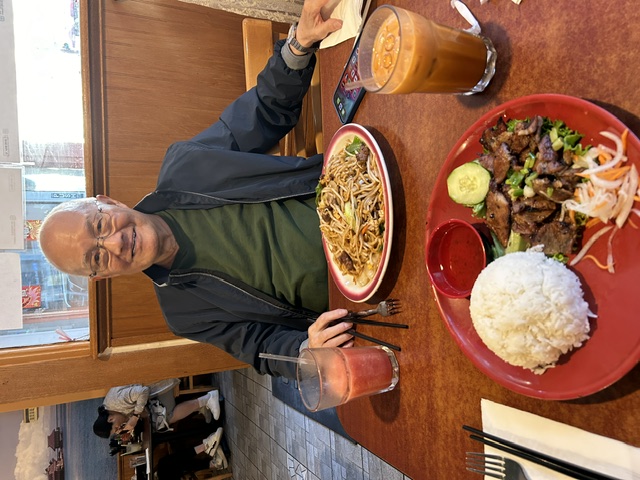
My dad is in his late eighties; like many his age, he's okay in some areas and worse in most others. Once an avid jogger, he now has major mobility and balance issues. He still likes devouring books about World War II, but now he re-reads the same books over and over without finishing them because he doesn't retain what he's read. He's lost most of his motivation for meeting people, going places, or trying new things. When we talk, it's about little stuff, because that's all he's comfortable talking about, when he's up for talking at all. His short-term memory is shot, so he'll ask a question, then repeat the same question a minute later. And it all gets worse from here. I'm beginning to understand what it means to have limits on daily existence, how options dwindle, what the end of everything looks like: mild cognitive impairment, assisted living, memory care, all the banal terms that are just signposts on the road to oblivion. I like to think I'm even-keel about life, but death still scares the crap out of me.

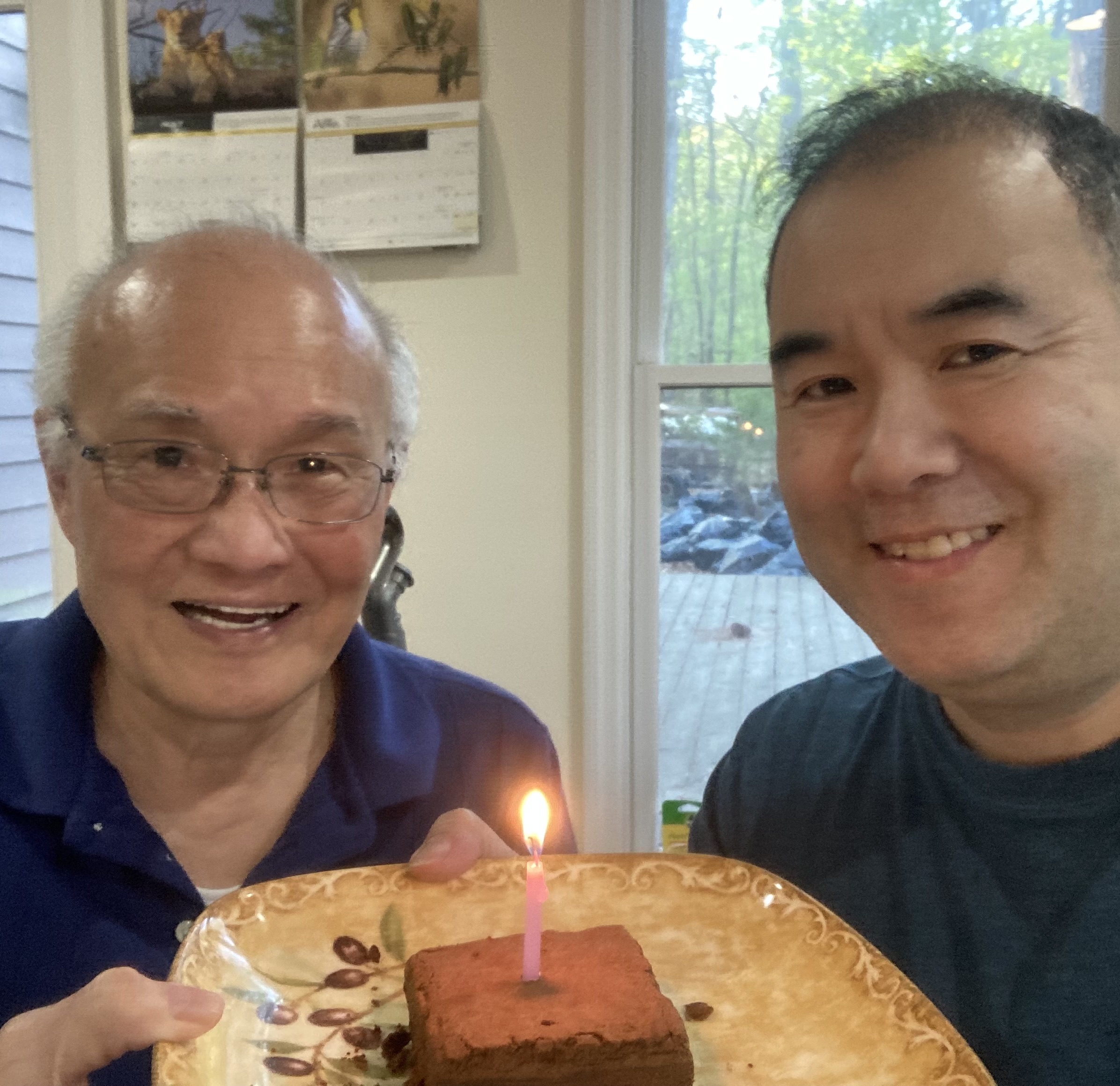
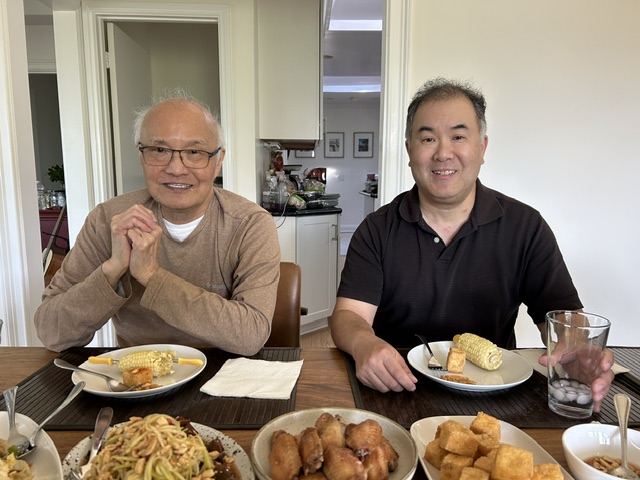
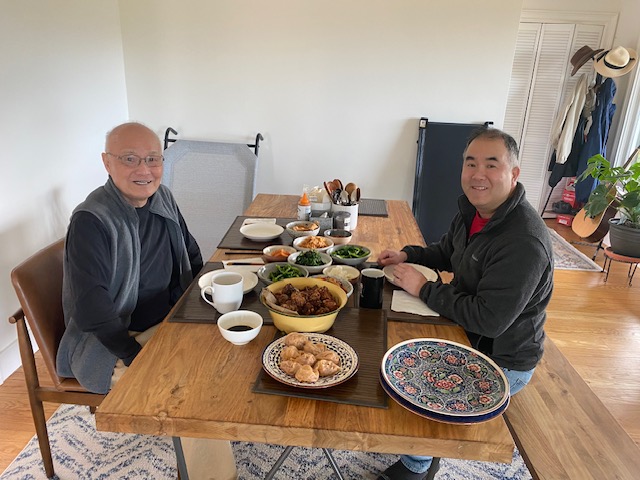
But he still enjoys dinner. Chinese, American, it doesn't matter; anything that's a change-up from the blandified meals at his senior home is welcome. When he's eating, he opens up about how good the food is, how he's looking forward to dessert. And with good food comes good conversation. Old stories about his family, questions about my wife's cultural background and upbringing, how different country A is from country B. Sometimes he'll reveal information he's never divulged to me before, like the Filipino girl he dated in college and how he still keeps in distant touch with her. The rest of it — the memory loss, the physical infirmities, the knowledge that the end is just around the corner — is still there, and when he struggles to his feet to go to the bathroom after eating, it all comes back. But dinners are still a time for when he is who he used to be, or at least the closest he's going to come. I try to treasure them while I can.

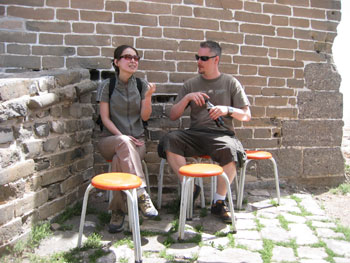
Dinner with Dad Dinner with Dad Dinner with Dad Dessert with Dad

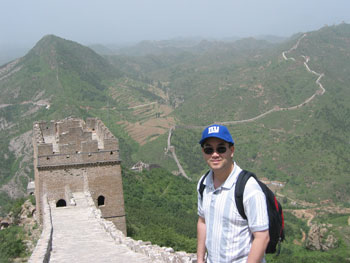
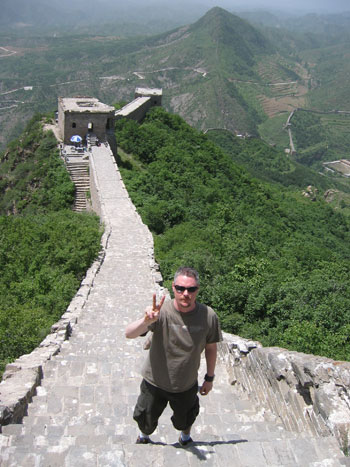
The Great Wall at Simatai

The Great Wall, three hours north of Beijing:

Great Wall at Simatai 1 Great Wall at Simatai 2 Great Wall at Simatai 3 Great Wall at Simatai 4 Great Wall at Simatai 5 Great Wall at Simatai 6 Great Wall at Simatai 7 Great Wall at Simatai 8 Great Wall at Simatai 9 Great Wall at Simatai 10 Great Wall at Simatai 11 Great Wall at Simatai 12
View on camera-roll.com

Paradise Regained: Dali

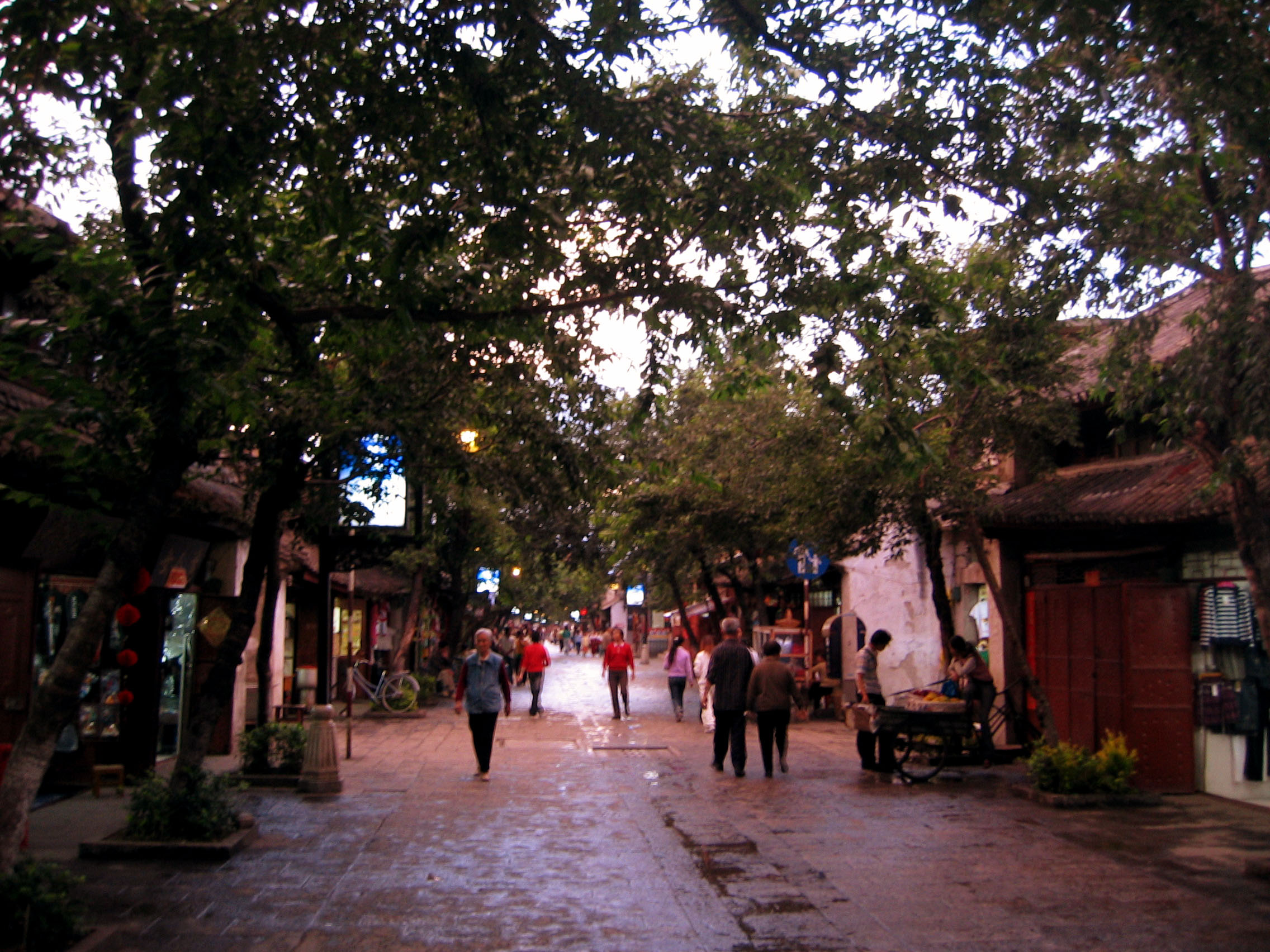
Dali Old City street scene, Yunnan Province, China

"A backpacker's paradise." That's what Dali is referred to as, and I fell for the hype. It's close to 10 p.m. I sit typing this on a ratty keyboard connected to a ratty computer in the MCA Guesthouse, the Internet user directly across the table from me blowing unfiltered cigarette smoke everywhere. Mosquitos are everywhere. In the distance, the latest Coldplay album is blasting on the speakers, and the foreigners are settling in for their late-night beers.

Back up a bit. How did we end up here?

Last night we caught the N982 train from Kunming to Dali. Those who know me know my famous Spring Festival train ride story, and my love-hate relationship with China's primary form of long-distance transportation (although buses are catching up fast). Kunming Station is actually more orderly than most train stations, and yet the lines were three columns deep, shuffling and pushing towards the door to the platform for our 10:30 p.m. Naturally, the last thing you want to worry about at the end of a long day is a headlong rush for a train, but Lisa, Jocelyn and I managed. Things got more amusing once we were on the train, for we were split up — I was in a compartment one door up, and Lisa and Jocelyn were bunked with two gregarious Beijing types who were laughing about the two funny foreigners in that offhandedly cutting way that northerners do. Soon they moved out — couldn't handle the English language, I suppose — and were replaced by a tour guide fluent in English named Jeff, who hailed from Kunming. He actually majored in education at Yunnan Normal University, but much preferred the roaming life, and interacting with visitors. In his tanktop undershirt, his slightly open mouth, and the way his glasses rode low on his nose, he reminded me of a student I knew a decade before — funny how people we meet seem to be alternate versions of folks we've known before. Perhaps there are only certain types, and we're fated to keep bumping into them.

Jeff provided some useful advice about places to see in Dali and Lijiang, our next two ports of call, and by this time it was 11 p.m., and time to sleep. Looking at Jeff, I also knew that he would be a snorer, and so I opted to retreat back to the compartment I had been assigned, where a woman occupant was complaining about the air conditioning — "Why is it on full blast in here, and every other compartment you can't feel anything? I'm going to freeze to death!" She had that wheedling tone that pushy Chinese women have that is all too familiar to my ears. Nevertheless, I hit the bed, scrunching my baggage to the end of it, and before I knew it, it was six in the morning, and we had reached Dali. Or so we thought.

There's nothing like piling out of a train at six in the morning in an unfamiliar destination. It's a curious blend of sensory alert and numbed bemusement. Jocelyn hadn't been able to sleep at all (I knew it, Jeff was a snorer). A taxi driver accosted us, and informed us that we were actually in Xiaguan (which is about 18km south of Dali). Not the best thing to wake up to in the morning. Nevertheless, we had made a new friend, and the driver (named Mr. Zhong) drove us to the MCA Guesthouse, which was a nice, albeit shabby little courtyard hotel with winding steps, rental bikes with dysfunctional locks, and a triple room where humidity hung everywhere, like a wet towel. We grabbed some breakfast at the Bamboo Cafe in the heart of Dali Old City (which stretches for about half a mile in each direction, walled in by one of those refurbished Chinese walls that are manna for the tourists). I had banana and honey pancakes, Lisa had Yunnan ham, and Jocelyn had salty beef. That last dish would prove to be fateful.

How to describe Dali? It might have been a wonderful place once, but the tourist trade and rampant reconstruction have taken their toll. Now it's like a figment of the place it probably once was — the relaxed alleyways are overrun with tourist cafes serving Western food, stalls and shops overpricing the local arts and crafts, prefab architecture providing a sterile update to the original buildings, the streets clogged with tour groups from every province and country. Sure, you feel a certain comfort at seeing the Bob Marley cafe, or menus in recognizable English, but in other ways this town is no different from countless others that have been similarly consumed by their own mythology.
Read full post at camera-roll.com

Kunming: The Spring City

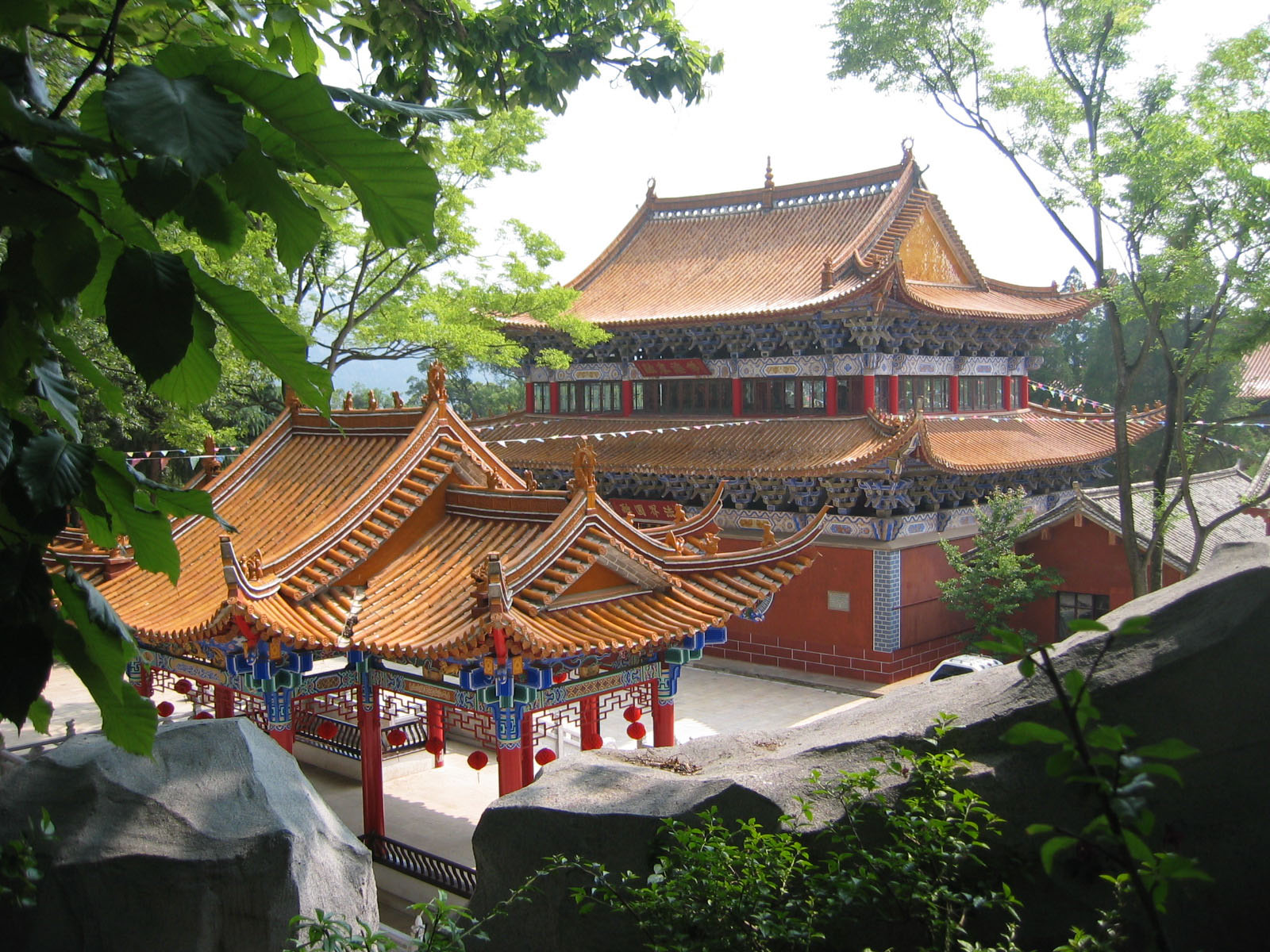
Kunming temple, Yunnan Province, China

I write this from the Camelia Youth Hostel, located in the heart of Kunming, Yunnan Province, China. I've been here for just over 28 hours, and shortly my friends Jocelyn and Lisa and I will be catching a train for Dali, a reputed backpackers' paradise (banana pancakes and Bob Marley tunes, here we come!).

This is my first time in Kunming, and my first time back in China in almost five years. Some things are identifiable almost immediately: the smells of burning coal, the hazy dust of a sunshine afternoon, the thrilling joyride that is crossing an intersection amidst bicycles, scooters, cars and trucks, the leveling tension of the locals giving you the "foreigner stare," or the bureaucrats and passport takers at the local airport (I was given the third degree about my "purpose" in China, and my passport taken to an unseen office before I was given the go-ahead to enter. No doubt I am listed on some computer somewhere, ready to be punched up the moment something suspicious takes place.)

But this is Kunming, Yunnan Province, southwest China, which has a different flavor from the rest of the country. People here are lighter, calmer, more mild than the ones in other parts of China. And then there are the little nuggets: the alleyways that spin off over tiny canals, the cypress trees and brilliant purple flowers, the hip night promenades with lights blazing, and knock-off items labelled affectionately "Garmani," the Muslim quarter and its dishes with questionable titles and impeccable tastes, the friendliness of most of the locals as they drive you or serve or simply watch you with bemused smiles on their faces. This is the China I remember, the one that always attracts me to this place, the one that helps me make it through the tough times, like when I'm given the stone face and the "stupid foreigner" look when I try to get directions from someone in my broken Chinese.

Lisa and Jocelyn seem to have taken to the place, and today we hit the local temples, including the Bamboo Temple, with its overwhelming array of realistic stone sculptures, monks and Buddhas and sinners all, surfing down the walls, the Western Hills, which towers over Dian Qi Lake and a host of new condos and highways, and even a minority culture museum which served as a good overview of the dizzying number of minority tribes that call Yunnan home. I've also had the chance to partake of some of the local delicacies, such as "herb-infused chicken" and "across-the-bridge" noodles, all of which have been excellent.

Even with all the positives, it'll be nice to get out of the big city over the next few days. Tonight it's an overnight train to Dali (8 hours), my first such trip since I made the 17-hour ride from Beijing to Shanghai 11 years ago. We'll see how much has changed. So tune in next time, wherein I'll relate what being in a backpackers' paradise really means, and detail the experience of riding a bicycle in China once again (The Bicycle Diaries?).

Read full post at camera-roll.com